Wednesday, October 23, 2024


Brain stimulation at home helps to treat depression
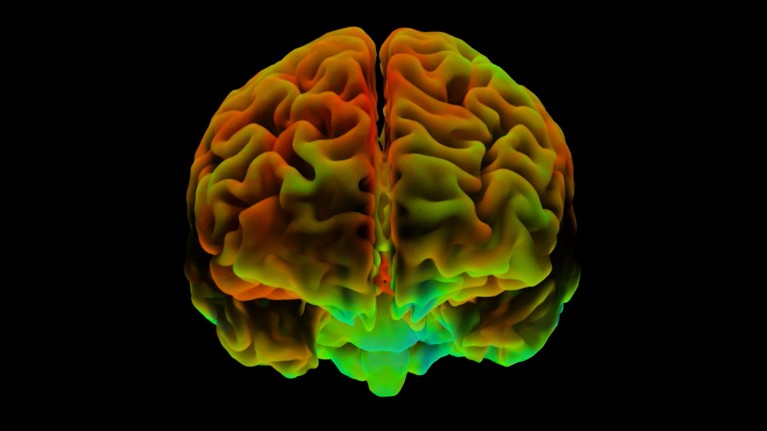


A remote clinical trial involving more than 150 people has shown that an experimental treatment for depression — which uses a swimming-cap-like device to gently stimulate the brain — can be effective when carried out at home.

The non-invasive therapy, known as transcranial direct current stimulation (tDCS), is designed to stimulate areas of the brain linked to mood regulation, and delivers a painless, weak electrical current through electrodes placed on the scalp. It could be a game-changer for the more than one-third of people with depression who do not respond to standard treatments such as antidepressants or  psychotherapy.

How deep brain stimulation is helping people with severe depression

The trial, described on 21 October in Nature Medicine1, found that after ten weeks of regular treatment, participants who received tDCS showed a greater reduction in depressive symptoms than did those in a control group. Previous research has explored using tDCS to treat depression, but this study stands out for its long timescale and remote, home-based design, which did not require participants to make daily visits to a specialized clinic.“When we think about that aspect of barriers to mental health, accessibility is a huge one,” says Shawn McClintock, a clinical neuropsychologist at UT Southwestern Medical Center in Dallas, Texas, who was not involved in the study. The trial “really starts to substantiate the ability to take mental health treatments into a home setting”, he adds.
Making brain cells fire

In the trial, researchers targeted the dorsolateral prefrontal cortex, a region of the brain involved in decision-making that is often less active in people with depression. “The tDCS involves a small current that makes it easier for the brain cells to discharge or to fire,” says study co-author Cynthia Fu, a clinical neuroscientist at King’s College London.

Fu and her colleagues trained 120 women and 54 men, all of whom had been diagnosed with a major depressive disorder, to use the tDCS headset and randomly allocated people to either the treatment or a control group.

Found: a brain-wiring pattern linked to depression

Those in the treatment group received a current of 2 milliamperes to the scalp — about 0.5% of the amount drawn by a 100-watt light bulb — for 30 minutes, 5 times a week for thefirst 3 weeks, then 3 times a week for 7 weeks. Participants in the control group wore a sham headset, which only delivered a brief pulse of current at the start of each session, mimicking the feeling of real tDCS without providing the same stimulation.

After 10 weeks, the treatment group’s scores on a scale that measures depression symptoms dropped by 9.41 points, whereas the control group’s score decreased by 7.14 points. Nearly 45% of participants with the active tDCS device experienced reduction in or recovery from their symptoms, compared with almost 22% of those with sham device. The headsets were used in addition to other treatments — many of the study participants took antidepressants and enrolled in psychotherapy for at least six weeks prior to the study.
Mixed results

Although these results are encouraging, previous research has suggested that tDCS doesn’t work for everyone. Last year, for example, a study of 150 people found that tDCS did not have antidepressant effects2. But trials with positive and negative outcomes are both equallyimportant to investigate the method’s potential as a treatment for depression, says Frank Padberg, a psychiatrist at Ludwig Maximilian University in Munich, Germany. The next step should be to understand why tDCS works for some people but not others, and to look for ways to personalize the treatment, he adds. “Different people need different dosages.”

Future studies could also use brain imaging and electrical recording to observe changes in neural circuits during tDCS treatment in real time, says McClintock. This would help researchers to “see what this treatment is actually doing at the neural circuit level”.

“Three decades ago, I wouldn't have thought that this stimulation does anything on the brain,” says Padberg. But now it is known that tDCS affects brain activity, “I'm pretty sure that an optimized method will make it to clinical care one day,” he says.


Tuesday, October 22, 2024


Global carbon dioxide emissions from forest fires increase by 60 percent


A major new study reveals that carbon dioxide (CO2) emissions from forest fires have surged by 60% globally since 2001, and almost tripled in some of the most climate-sensitive northern boreal forests.


The study, led by the University of East Anglia (UEA) and published today in Science, grouped areas of the world into 'pyromes' -- regions where forest fire patterns are affect`ed by similar environmental, human, and climatic controls -- revealing the key factors driving recent increases in forest fire activity.

It is one of the first studies to look globally at the differences between forest and non-forest fires, and shows that in one of the largest pyromes, which spans boreal forests in Eurasia and North America, emissions from fires nearly tripled between 2001 and 2023.


Significant increases were seen more broadly across the extratropical forests and amounted to an additional half a billion tonnes of CO2 per year, with the epicentre of emissions shifting away from tropical forests and towards the extratropics.

Increased emissions were linked to a rise in fire-favourable weather, such as the hot-dry conditions seen during heatwaves and droughts, as well as increased rates of forest growth creating more vegetation fuels. Both trends are aided by rapid warming in the high northern latitudes, which is happening twice as fast as the global average.

The study reveals a worrying increase in not only the extent of forest wildfires over the last two decades, but also their severity. The carbon combustion rate, a measure of fire severity based on how much carbon is emitted per unit of area burned, increased by almost 50% across forests globally between 2001 and 2023.The work involved an international team of scientists -- from the UK, the Netherlands, US, Brazil, and Spain -- who warn that further expansion of forest fires can only be averted if the primary causes of climate change, such as fossil fuel emissions, are tackled.


Lead author Dr Matthew Jones, of the Tyndall Centre for Climate Change Research at UEA, said: "Increases in both the extent and severity of forest fires have led to a dramatic rise in the amount of carbon emitted by forest fires globally. Startling shifts in the global geography of fires are also underway, and they are primarily explained by the growing impacts of climate change in the world's boreal forests.

"To protect critical forest ecosystems from the accelerating threat of wildfires, we must keep global warming at bay and this underscores why it is so vital to make rapid progress towards net zero emissions."Threats to carbon storage

Forests are of worldwide importance for carbon storage, with their growth helping to remove CO2 from the atmosphere and reduce rates of global warming. They also play a crucial role in meeting international climate targets, with reforestation and afforestation schemes being implemented to remove carbon from the atmosphere and offset human CO2 emissions from hard-to-abate sectors such as aviation and certain industries.


"Until now, reduced burning in the already fire-prone savannahs and grasslands has masked increases in forest fire extent and severity that are hugely consequential for society and the environment," said Dr Jones. "Our work shows that fires are increasingly happening where we don't want them to -- in forests, where they present the greatest threat to people and to vital carbon stores."Managing wildfires

Machine learning was key to unlocking new observations about the shifting global geography of forest fires. It was used to group the world's forest ecoregions into 12 distinct pyromes, allowing the researchers to isolate the effects of climate change from other influencing factors such as land use.

This knowledge also reveals new insights into which strategies can be most effective for mitigating wildfires and protecting forests. Dr Jones said: "Substantial financing is required to support strategic programs of forest management, stakeholder engagement, and public education, all of which represent a meaningful shift of fire management strategy from largely reactive to increasingly proactive."For example, priority areas for forest management and fire breaks must be defined based on proactive monitoring of forest productivity, particularly in the extratropics. Managing fuel loads in places where they could present greatest danger during fire-favourable weather is a key priority for limiting the severity and impact of fires when they do occur." The work was supported by funders including the UK Natural Environment Research Council (NERC), European Commission Horizon 2020 programme, and European Space Agency.

The work was supported by funders including the UK Natural Environment Research Council (NERC), European Commission Horizon 2020 programme, and European Space Agency.The success of these schemes relies on carbon being stored in forests permanently, and wildfires threaten that. Extratropical fires are already emitting half a billion tonnes more CO2 than two decades ago, and the long-term effect depends on how forests recover. More widespread and severe forest fires are a sign that emissions are now out of balance with the carbon captured by post-fire recovery.

Dr Jones, a NERC Independent Research Fellow, said: "The steep trend towards greater extratropical forest fire emissions is a warning of the growing vulnerability of forests and it poses a significant challenge for global targets to tackle climate change.


"We know that forests rebound poorly after the most severe fires, so there is huge interest in how the observed increases in fire severity will influence carbon storage in forests over the coming decades. This demands our close attention."

Escalating wildfire impacts masked until now

Significantly, the increased emissions from forest fires contrasts with the reduced burning of the world's tropical savannahs during the same period. Previous studies have shown that, since 2001, the area burned by all fires (forest and non-forest) fell by a quarter globally, mainly due to this.

The latest findings are important because forest fires burn more severely and release larger amounts of harmful smoke to the atmosphere than savannah grassland fires, presenting major threats to those living near fires and to more distant communities exposed to poor air quality caused by smoke.

The authors say the study debunks the narrative that falling overall annual area burned by fire globally means falling wildfire impact.

Monday, October 21, 2024


Archaeologists discover 12 skeletons at a buried tomb in Petra, Jordan


Archaeologists say they've made a remarkable discovery in a place already known for its rich ancient history: 12 full skeletons in a tomb beneath one of Jordan's biggest tourist attractions.

The remains were found beneath the Treasury, also called Al Khazneh, in the ancient city of Petra — famous as a landmark seen in the movie Indiana Jones and the Last Crusade.

The Treasury, believed to be a mausoleum, was carved by the Nabataean people around 2,000 years ago. Petra was the capital of the Nabataeans, who carved many elaborate structures out of rose-colored rock. The city is now a UNESCO World Heritage site.

Richard Bates, a professor of geophysics at the University of St Andrews in Scotland who was part of the archaeological team, said the discovery will help researchers learn more about the ancient people."If you look at all the other tombs in the Petra area, only a few have ever contained any human remains, and those are very fragmentary, whereas this has got 12 complete bodies within it," he told NPR.


Bates said the discovery not only sheds light on the rituals involved in Nabataean birth and death practices, but also, "by analyzing the skeleton material, the teeth, the bones, we can tell things about their lifestyle. So it's going to unlock a view on Nabataean life that we've just never had access to before."

A local archaeological team obtained the rare permission to get inside the Treasury building. Bates ran ground-penetrating radar as part of the team. "That's when we discovered the signals which I interpreted as voids in the subsurface," he said.


The new chamber is about 18 feet by 18 feet and 9 feet tall, he estimates, and preliminary dating puts it from around the first century B.C. to the first century A.D., in the middle of the Nabataean Kingdom. The civilization existed from roughly the 4th century B.C. until it was annexed by the Romans in 106 A.D.

THE TWO-WAY
Massive Structure Found 'Hiding In Plain Sight' At Ancient Site Of Petra

Archaeologists had already discovered indications of this tomb around 2003, but the dig site was shut down over lack of funding at the time, Bates said. Separate tombs were discovered at the Treasury in 2004, according to Petra's tourism authority, which says they were royal tombs.

The tomb's discovery happened over the summer but is now being publicized as part of the show Expedition Unknown on the Discovery Channel.


In a coincidence, the crew also found that one skeleton was holding a ceramic vessel similar to a famous chalice seen in the Indiana Jones movie.

Archaeologist Pearce Paul Creasman of the American Center of Research, who led the team, said in a press statement that mysteries still remain about the Treasury. "When was this remarkable structure built, and why? Little did we know that this dig might completely change what we know about The Treasury and help solve the mysteries of the Nabataean people."

In an email to NPR, Creasman also credits the work of the project's co-directors: Fadi Bala'awi, the director general of Jordan's Ministry of Tourism and Antiquities; and Fares Braizat, the chief commissioner of the Petra Development and Tourism Region Authority.

What happens next for the project comes down to funding.

"The next step for this set of discoveries is to get the money to properly exhume at least one of the bodies and do a full study on it," Bates said, with the goal of examining all the bodies.


Saturday, October 19, 2024


How does the brain react to birth control? A researcher scanned herself 75 times to find out


Chicago, Illinois

Hold the morning coffee and meditation: for about 75 days over the span of a year, neuroscientist Carina Heller's morning ritual included climbing into her university's brain scanner at 7:30 a.m. and lying perfectly still for an hour and a half — without falling asleep. By her estimates, this has made her the most-scanned woman in science.

It’s not the title she was after. Heller’s goal was to catalogue how her brain changes during her menstrual cycle, with and without oral contraceptives . Her findings suggest that brain morphology and connectivity change daily throughout the natural cycle and are influenced by birth-control pills, according to preliminary results presented at this year’s annual Society for Neuroscience conference.

Heller is one of a cadre of women’s health researchers who are tired of waiting for data to trickle in on a chronically understudied area, and have taken matters into their own hands by hopping into a brain-imaging machine. More data could offer women and their physicians greater agency to make “better-informed decisions of whether they want to take the medication or not”, and what specific formulations might be best suited for them, says Heller, who is based at the University of Minnesota Twin Cities in Minneapolis.

“She did this rigorous self-experimentation where she gave herself up to science,” says Emily Jacobs, a neuroscientist at the University of California, Santa Barbara, who works with Heller.“And as a result, we now have this greater insight into the human brain.”


Research gaps

Oral contraceptives often contain synthetic versions of one or two hormones the body naturally produces: progesterone and oestrogen. These hormones prevent pregnancy in several ways, including by stopping the ovaries from releasing an egg.

US regulators approved the first oral contraceptive in 1960. Within two years, more than one million people were taking ‘the pill’, as it became known. Today, more than 150 million people of reproductive age globally take oral contraceptives, placing them among the most-used medications in the world. Many take the pill for reasons unrelated to conception, such as managing acne, regulating menstrual cycles or helping to relieve menstrual symptoms and migraines.

Decades of data on these medicines suggest that they are generally safe, but their effects on the brain remain understudied. For example, although some people report that they experience decreased depression and anxiety, others find that these symptoms worsen — and it’s unclear why.

Many people begin taking the pill during puberty, which is a crucial time for brain maturation, so it’s important to understand how it affects neurodevelopment, says Kathryn Lenz, a behavioural neuroscientist at The Ohio State University in Columbus.
The adaptable brain

Most neuroimaging experiments use magnetic resonance imaging (MRI) technology to scan the brains of 10–30 participants only once or twice, which is costly to perform. This approach fails to account for daily variation in brain morphology and connectivity.

A growing number of neuroimaging studies instead use a technique called ‘ dense sampling ’, in which researchers scan a single or handful of participants repeatedly to build a high-resolution data set. Dense sampling captures observations that might otherwise be overlooked, but the small sample size results in limited generalizability of findings to larger populations.

Even so, by comparing data sets between participants — especially those who have different reactions to the pill — researchers might be able to pinpoint what drives different side effects.

Using this approach, Heller scanned herself 25 times over 5 weeks, capturing images at different stages of her natural menstrual cycle. A few months later, she began taking oral contraceptives and then waited 3 months before scanning herself another 25 times in 5 weeks. At that point, Heller ceased taking the pill, waited another 3 months and scanned herself a final 25 times over 5 weeks. She also had blood drawn and completed a survey about her mood after each scan.

Heller found a rhythmic pattern of change in brain volume and connectivity between brain regions over the course of her menstrual cycle, with volume and connectivity dipping slightly while she was taking oral contraceptives. (Higher brain volume or connectivity does not imply improved brain function, and vice versa.)

This pattern largely returned to its former state after she stopped taking the medication, showing that the brain is “quite adaptable”, says Laura Pritschet, who conducted her graduate work with Jacobs and is now a cognitive neuroscientist at the University of Pennsylvania in Philadelphia.
An expanding network

Heller drew inspiration from a study in which Pritschet scanned her own brain for 30 consecutive days during her natural menstrual cycle and for 30 more days while taking oral contraceptives. This was part of a project that Pritschet calls 28andMe: the name is a nod to the consumer-genetics firm 23andMe in South San Francisco, California, and the 28 days in a canonical menstrual cycle.

Data from Pritschet’s project showed that higher levels of oestrogen drive certain important brain networks to become more functionally connected 1. One of these was the ‘default mode network’, which is active during daydreaming and is involved in memory. Progesterone had the opposite effect. Pritschet also scanned her husband over 30 consecutive days in a spin-off project called 28andHe, to understand the effects of hormone fluctuations in the male brain2.

Next, Heller plans to compare her data with those from a woman with endometriosis, a painful condition that affects up to 10% of reproductive age women, to understand whether hormone fluctuations in the brain could be driving the condition.

These data sets are “going to give us a really intriguing window into the relationship between hormonal status and subtle changes in brain structure and behavioural functions”, Lenz says.


Friday, October 18, 2024


ALS drug shows promise in targeting glioblastoma stem cells

Glioblastoma is the most common – and the most malignant – primary brain tumour in adults. It's aggressive and incurable. Even with treatment including surgical removal and chemotherapy, the median survival for patients is just 18 months.

Now, innovative new research led by Dr. Arezu Jahani-Asl, Canada Research Chair in Neurobiology of Disease at the University of Ottawa, provides highly compelling evidence that a drug used to slow the progression of the disease ALS shows promise in suppressing the self-renewing cancerous stem cells that challenge the present standards of care for these lethal grade 4 brain tumours.

Her team's findings could prove highly impactful because brain tumour stem cells (BTSCs) are at the very core of therapeutic resistance and tumour recurrence in glioblastoma, a devasting and treatment-resistant type of cancer that impacts four per 100,000 people in Canada.

Indeed, discovering ways to effectively target these rare populations of highly resistant cells could have major implications for global efforts to combat brain cancer, according to Dr. Jahani-Asl, associate professor in the Department of Cellular and Molecular Medicine and a member of the uOttawa Brain and Mind Institute.

Here's what the uOttawa-led team found: The drug edaravone (brand name Radicava) inhibits the self-renewal and proliferation of brain tumour stem cells so repurposing the drug may prove to be a potent weapon against glioblastoma. They reported their findings in the journal Stem Cell Reports.

"We show that edaravone specifically targets cancer stem cells and is particularly effective in combination with ionizing radiation," she says. "The study suggests that edaravone in combination with ionizing radiation can be effective in eradicating cancer stem cells, and thus is expected to decrease the chance of resistance to therapy and recurrence in glioblastoma patients."

Ionizing radiation is a type of radiation that is used in cancer therapy to kill or inhibit the growth of malignant cells. Next steps for the researchers include writing a protocol on the best ways to optimize edaravone drug dosage in combination with ionizing radiation and chemotherapy.

Repurposing existing marketed drugs already approved for human use is an increasingly popular strategy of battling different types of cancer cells. And compounds that have already been proven safe could potentially advance swiftly to clinical trials. Since edaravone is an approved compound that has already been shown safe in humans, Dr. Jahani-Asl says repurposing the drug and its translation for glioblastoma is "very promising."Edaravone was approved by the U.S. Food and Drug Administration in 2017 to treat ALS, and Health Canada approved the drug's oral formulation in 2022. It's also used to treat stroke.

Before the completed study provided compelling evidence that edaravone sensitizes glioblastoma tumours to radiation therapy in animal models, the research team conducted gene expression analysis in patient-derived brain tumour stem cells in the absence and presence of the drug.

"We found significantly deregulated gene panels related to stemness and DNA repair mechanisms which was the spark to begin a new major line of investigation," Dr. Jahani-Asl says.

Achieving new insights into BTSC regulation is at the forefront of efforts to battle glioblastoma, and Dr. Jahani-Asl is an international leader in this effort. Her research program at the uOttawa Faculty of Medicine is centered on developing novel therapeutic strategies for complex and devastating brain diseases.

Any new drug for glioblastoma is expected to be used in combination with the present standard treatments which includes ionizing radiation and chemotherapy.

"Our goal is now to try to optimize dosage for a safe therapeutic window," Dr. Jahani-Asl says. "Once we establish a dose that is safe for use in combination therapy, we will be well equipped with the knowledge to move this forward to clinic."

Thursday, October 17, 2024


Bright night light exposure increases mortality risk, while daylight reduces it


In a recent study published in the journal Proceedings of the National Academy of Sciences, researchers investigated whether personal day and night light exposure and circadian rhythm disruption could predict the risk of mortality.


They found that exposure to brighter daytime light reduced mortality risk. In comparison, exposure to brighter nighttime light and disrupted circadian rhythms (low amplitude, early or late phase) increased mortality risk, particularly for cardiometabolic causes, which showed stronger associations than other causes.
Background

Disruption of the circadian rhythm is linked to various adverse health outcomes, including an increased risk of premature mortality. Nighttime light exposure shifts the timing and weakens the signal of the circadian pacemaker in the hypothalamus, leading to circadian disruption.

Animal studies show that exposure to light at night causes premature death, and human populations exposed to more night light, such as shift workers and evening types, have higher mortality risks.

While night light disrupts circadian rhythms, daylight stabilizes and strengthens them, potentially reducing sensitivity to night light and protecting against circadian-related health issues.

Studies suggest that daylight exposure lowers risks of all-cause mortality and cardiovascular diseases, though they often rely on self-reports or satellite data. Circadian disruption, particularly from irregular light exposure, is associated with cardiometabolic disorders like hypertension, diabetes, and heart disease.

However, there is a dearth of large-scale studies on personal light exposure and cardiometabolic mortality risks. Therefore, researchers in the present study investigated the potential association between day and night light, circadian rhythms, and mortality risk using ~13 million hours of personal light exposure data obtained from light sensors.
About the study

In the present study, ~89,000 participants from the United Kingdom (UK) Biobank wore wrist devices to track personal light exposure data over about seven days.

Light exposure data were collected at 100 Hz using a light sensor sensitive to human vision, and profiles were created based on half-hour intervals across the 24-hour day.

Participants with insufficient data or device issues were excluded, leaving 88,905 individuals. The mean age of the participants was 62.4 years, 56.9% of them were female, and 97% were White.

Mortality data, including those of all-cause, cardiometabolic-cause, and other-cause mortality, were collected from the National Health Service (NHS) Digital (England) and NHS Central Register (Scotland) over a mean follow-up period of eight years.

Baseline covariates like ethnicity, income, smoking, and physical activity were considered, along with photoperiod and sleep data. Cox proportional hazards models were used to estimate mortality risk, and light exposure percentiles were divided into day and night groups.

Circadian phase and amplitude were modeled using a computational approach, predicting the circadian disruption based on personal light exposure data. Z-scores of amplitude values and phase variability were included in the models.
Results and discussion

A total of 3,750 all-cause deaths and 798 cardiometabolic deaths were recorded. Exposure to brighter night light was found to be associated with increased all-cause mortality risk (adjusted hazard ratio [aHR] range: 1.15 to 1.34), with stronger associations for cardiometabolic mortality (aHR range: 1.22 to 1.46), and other-cause mortality (aHR range: 1.13 to 1.15).

On the other hand, exposure to brighter daylight was found to correlate with lower risks of all-cause mortality (aHR range: 0.66 to 0.90) and cardiometabolic mortality (aHR range: 0.61 to 0.84).

Individuals in higher night light percentiles showed significantly elevated risks compared to those in the darkest percentiles (0 to 50th). Additionally, lower circadian amplitude and both early and late circadian phases predicted higher mortality risks.

The study also found that short sleep (less than six hours) partially attenuated the association between night light and all-cause mortality. However, the impact of daylight exposure remained significant, regardless of sleep duration or efficiency.

Overall, the findings suggest that avoiding nightlight and seeking daylight may promote better health and longevity, offering an accessible and cost-effective recommendation for potentially improving well-being.

However, the study is limited by its reliance on only one week of light data, the computational model based on younger adults, and the lack of data on individual light sensitivity. There is also a limitation regarding the cohort's predominantly white ethnicity, which may affect generalizability.
Conclusion

In conclusion, the study suggests that maintaining darkness during late night and early morning, when circadian rhythms are most sensitive, and seeking bright light during the day can potentially enhance circadian function. This is especially important for those at risk of circadian disruption, such as in intensive or elderly-care settings.


Wednesday, October 16, 2024


Runaway stars could influence the cosmos far past their home galaxies


Dozens of fugitive stars were caught fleeing a dense star cluster in a satellite galaxy of the Milky Way. The swarm of speeding stars could mean that such runaways had a bigger influence on cosmic evolution than previously thought, astronomers report October 9 in Nature.

Massive stars are born in young clusters, packed so close together that they can jostle each other out of place. Sometimes, encounters between pairs of massive stars or neighboring supernova explosions can send a star zipping out of the cluster altogether, to seek its fortune in the wider galaxy and beyond.Astronomer Mitchel Stoop of the University of Amsterdam and his colleagues searched for runaway stars around a huge cluster of massive stars called Radcliffe 136 using data from the Gaia spacecraft on the speeds and positions of billions of stars (SN: 6/13/22). R136 is located about 170,000 light-years from Earth in the Large Magellanic Cloud, a dwarf galaxy that orbits the Milky Way.

The cluster “is an iconic object,” says astrophysicist Sally Oey of the University of Michigan in Ann Arbor, who was not involved in the new work. The view from Earth’s neighborhood is so clear, “we can really look at things up close and personal.”

Previous studies had found a few stars fleeing the cluster (SN: 5/7/10). But in a wider search, Stoop found an astonishing 55 stars had fled at speeds faster than roughly 100,000 kilometers per hour in the past 3 million years.“That is an incredible number to think about,” Stoop says. The observation suggests that as many as a third of the brightest, most massive stars born in the cluster have left home.

That means runaway stars could be an underappreciated force in the universe. These massive stars, about five to 140 times the mass of the sun, emit ultraviolet radiation and supersonic stellar winds that can sculpt the gas and dust around them (SN: 7/11/22). At the end of their lives, the heavyweight stars explode as supernovas, spreading heavy elements around the galaxy (SN: 7/7/21).

“Before, we’d expect maybe there are a handful of runaways,” Stoop says. But because of their presumed low numbers, he says, they would be left out of studies and simulations. If each cluster instead loses about a third of its stars to the surrounding galaxy, or even the space between galaxies, “they can maybe have a major contribution to dumping all these ultraviolet photons into the intergalactic medium.”Such escapees could also have had a profound influence on the evolution of the early universe. Within a few hundred million years of the Big Bang, more than 13 billion years ago, some source of ultraviolet radiation stripped electrons from a pervasive fog of hydrogen atoms, a phenomenon called reionization (SN: 11/7/19).

Astronomers think most of the photons, or particles of light, that cleared the cosmic fog came from dwarf galaxies (SN: 2/6/17). But simulations have found that only a fraction of the photons needed can escape the environments of those galaxies. Runaway stars could help account for the difference, Stoop says.

“Maybe this happened in [early universe] galaxies as well, during the epoch of reionization,” he says.Oey says, “There’s no doubt that runaway stars are really important and have been underappreciated.” But, she says, there are other ways to get ionizing radiation out of galaxies, and it’s not clear how much of a difference including runaway stars would make.The timing of the stars’ escape from R136 might also throw a wrench in the broader relevance of runaway stars to reionization.

Surprisingly, the stars didn’t all migrate in one wave. The scientists know this because they have the stars’ speeds and distances and can calculate when they started their escape. Most of the runaways fled R136 in all directions about 1.8 million years ago, when the cluster was forming. That’s what you’d expect if they were booted out by encounters with other massive stars.

But 16 of the escapees left the cluster more recently, just 200,000 or so years ago. And they were all fleeing in the same direction. Stoop and his colleagues think those stars’ escape might have been triggered by a merger with another cluster.

“That seems like a fairly unique occurrence,” says astrophysicist Kaitlin Kratter of the University of Arizona in Tucson. If R136’s double ejection is unusual, then it might be hard to extrapolate how many stars other clusters lose to their cosmic surroundings. Finding evidence of similar waves in other clusters would help resolve the question.

Celebrating Dr. Narjes Sadeghiamirshahidi’s Remarkable Research Journey #GlobalBestAchievementsAwards #WorldResearchAwards

Celebrating Dr. Narjes Sadeghiamirshahidi’s Remarkable Research Journey Congratulations to Dr. Narjes Sadeghiamirshahidi on this distinguish...